The Plain Facts, Carved
What It Is
Told in the Seanchaí Tradition
The Build Story
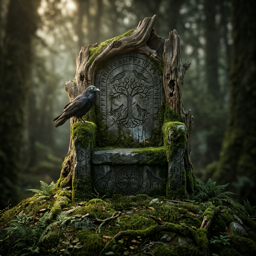
The sagas are exact about the seat: Hlidskjalf is the high seat of the gods, and its gift is not walking the worlds but seeing them — whoever sits there watches all that moves in the nine realms at once, and it was Odin's because he was the one who needed the sight. The pack came to the same need by a road the ancients would have recognized. It kept dispatching its agents out to far grounds — jobs riding the cluster under names like agent-, labelled for their issues, launched into sandboxes and left to their work — and for a while it learned what came of them the way everyone learns what came of far work: by asking, afterward. So the garden raised the seat. A Hono hall with a React face, pitched on the same ground as the watched themselves; a namespace tree that spreads the realms out like a map of the nine worlds, the wolf's own grounds first among them; session cards standing the dispatched agents in a bench like a war-band drawn up for review; and the true sight of the seat, the log stream, pouring a session's run out live, line by line as it is written, until the run speaks its verdict and the decree tablet beneath the stream carries it whole — what was changed, what passed, who signed. One door guards the whole of it — the Google pairing gate — and the door is the whole of the gatekeeping: beyond it, the pack, and no one else. The ancients held that the watcher at Hlidskjalf paid for the sight with an eye given up in advance; this seat costs the pack a Helm chart, a subdomain, and the discipline to keep the logs honest.
The Ledger of Sight
Beheld
The camera came to the seat itself — three sights of the hall as it keeps its watch, planted here while the hall finishes its raising:

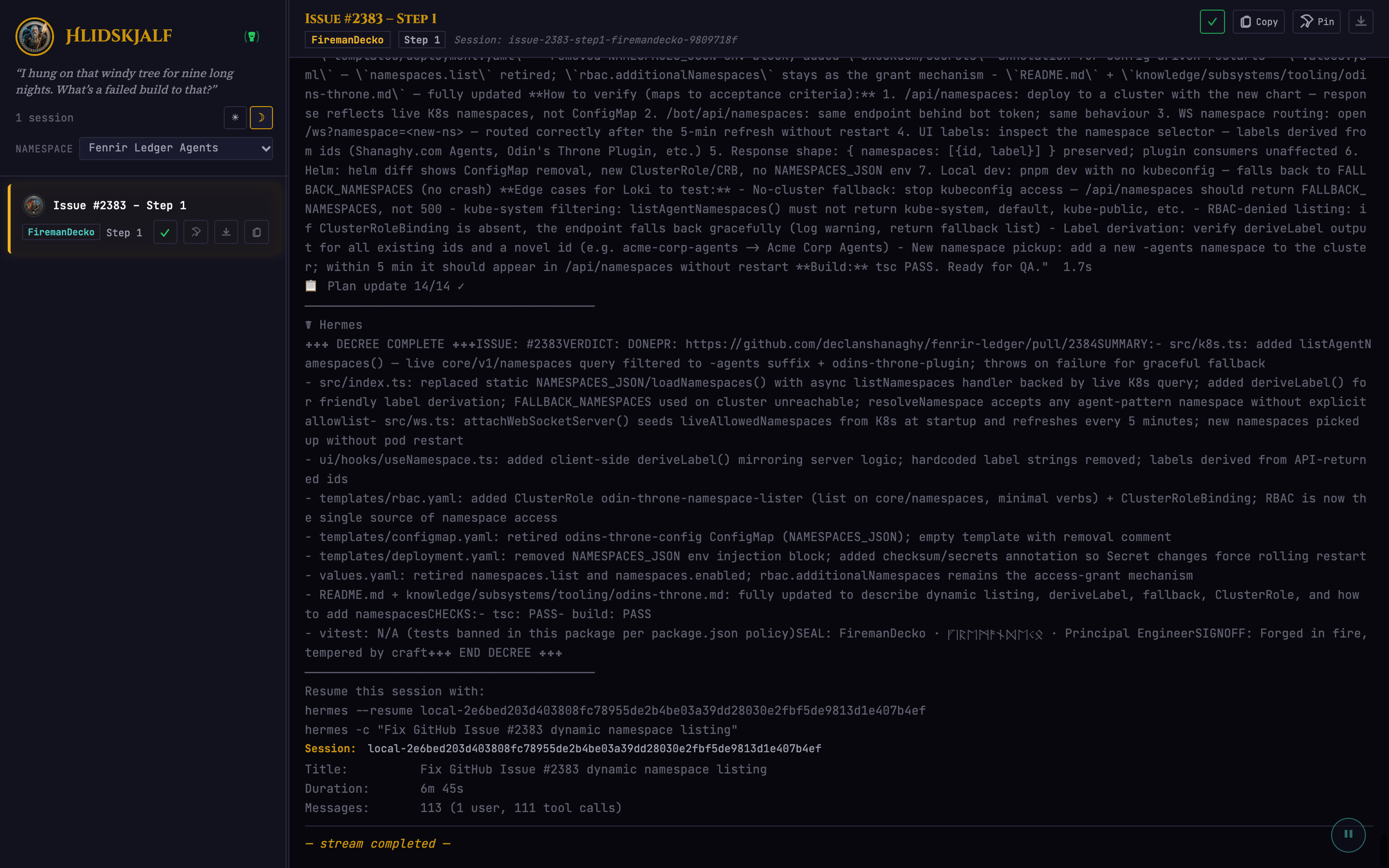
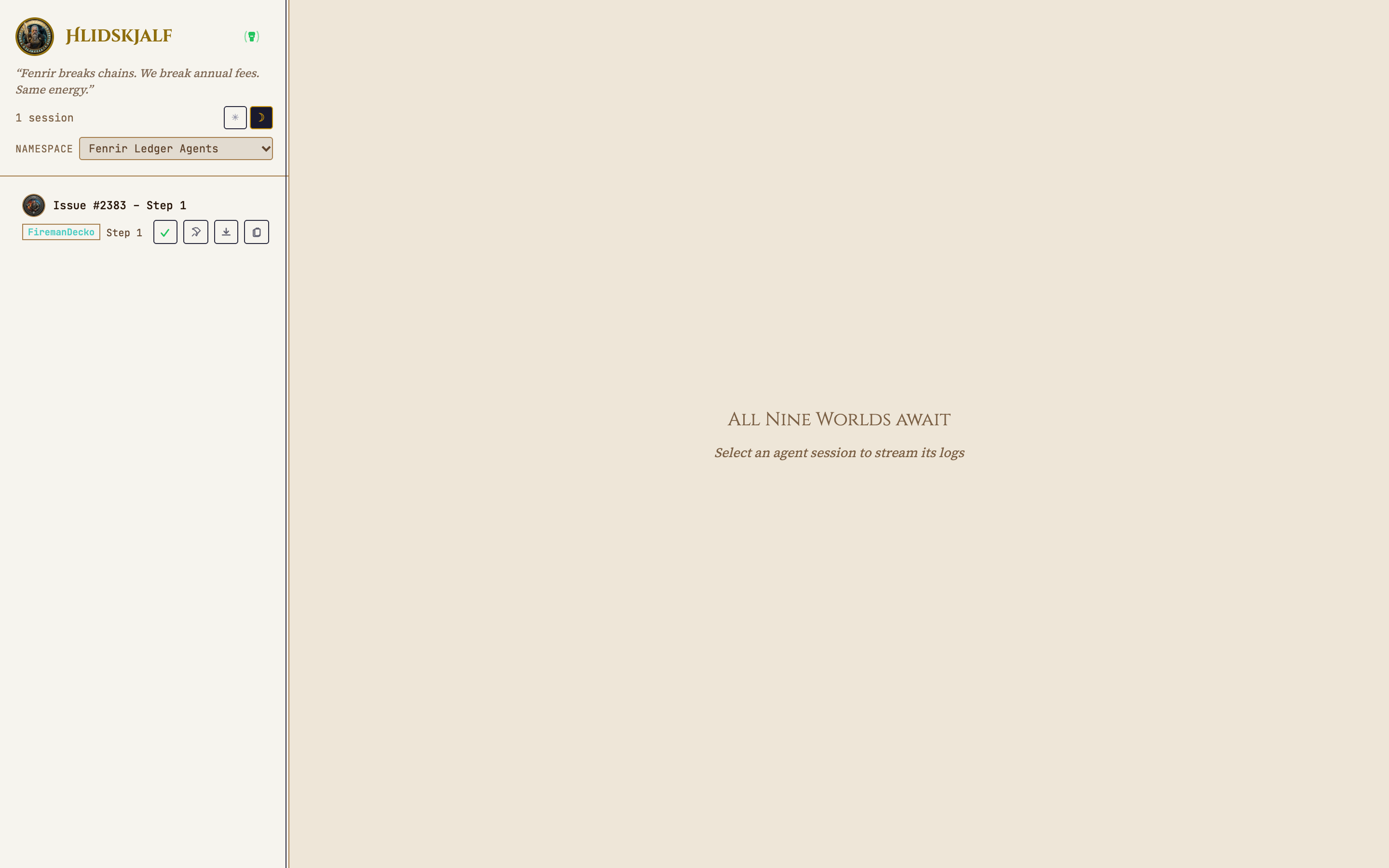
Three sights cut from the hall itself — the tree, the stream, the daylight telling. The hall stands lit at odins-throne.shanaghy.com — the ground is sworn; the gate keeps the door.